Quick Answer: Indoor play offers children a safe, controlled environment to develop essential skills beyond just physical exercise. It significantly boosts cognitive abilities, social interaction, emotional regulation, and creativity, laying a crucial foundation for their overall growth and learning.
Key Takeaways:
- Indoor play builds problem-solving skills and critical thinking.
- Structured and unstructured indoor activities improve social interaction and cooperation.
- Dedicated indoor spaces can reduce anxiety for children with sensory sensitivities.
- Even short bursts of indoor play contribute positively to daily development.
- Creative indoor activities foster imagination and innovative thinking.
- Parents can create engaging indoor play zones at home with minimal budget.
- Physical indoor play, like soft play areas, enhances gross and fine motor skills.
- Balancing indoor and outdoor play offers the most comprehensive developmental benefits.
What Are the Benefits of Indoor Play for Child Development?
Indoor play significantly aids child development by providing opportunities for cognitive, social, emotional, and physical growth in a protected setting. Children learn to solve problems, engage with others, understand their emotions, and refine their movements through various indoor activities. This type of play helps build a strong foundation for future learning and social engagement.
Benefits include:
- Cognitive Boost: Puzzles, building blocks, and imaginative play enhance memory, attention span, and critical thinking. Children learn cause and effect and spatial reasoning.
- Social Skills: Group activities in indoor play areas encourage sharing, cooperation, and communication. They learn to negotiate and understand different perspectives.
- Emotional Regulation: Role-playing and creative expression allow children to process emotions and develop empathy. A safe play space helps them feel secure enough to explore these feelings.
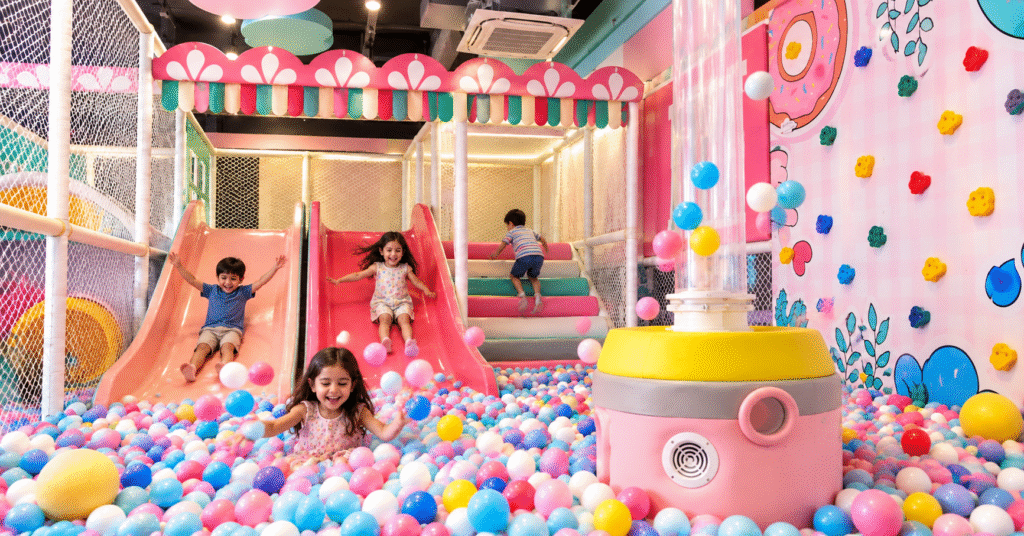
- Physical Dexterity: Soft play areas with climbing structures, slides, and ball pools improve gross motor skills. Fine motor skills are developed through crafts, drawing, and manipulating small toys. You can read more about the 5 Benefits Of Indoor Play For Kids Physical And Social Development.
- Creativity and Imagination: Without the distractions of open spaces, children often dive deeper into imaginative scenarios, building entire worlds from simple toys.
How Much Indoor Play Do Kids Need Per Day?
Children benefit from varied play, and even 30-60 minutes of focused indoor play daily can be highly beneficial, especially for younger children. This isn’t a strict rule, as the specific needs depend on a child’s age, energy levels, and overall routine. The quality of play is more important than the exact duration.
Consider these points:
- Toddlers (1-3 years): Short, frequent play sessions work best. Multiple 15-20 minute bursts throughout the day can engage their developing curiosity.
- Preschoolers (3-5 years): They can engage in longer, more complex activities, perhaps 30-45 minutes at a time. This could involve imaginative play or building projects.
- School-Aged (5-8 years): While they may have school, dedicated indoor play after studies can help them unwind and continue learning in a different way. An hour can be a good target.
- Flexibility is Key: On days with outdoor play, indoor time might be shorter. On rainy days in Gurgaon, it might be longer. Listen to your child’s cues for when they need a break or a change of activity.
Indoor Play vs. Outdoor Play: Which Is Better for Kids?
Neither indoor nor outdoor play is inherently “better”; both are vital for comprehensive child development and offer distinct benefits. Outdoor play connects children with nature, builds resilience, and offers expansive physical activity, while indoor play fosters focus, creativity, and social skills in a controlled setting. The ideal approach is to provide a healthy balance of both.
Think about the unique contributions:
- Outdoor Play: Offers fresh air, exposure to natural elements, large-scale physical challenges, and sensory experiences like dirt, grass, and sunshine. It helps children gauge risk and develop spatial awareness.
- Indoor Play: Provides a predictable environment for focused learning, imaginative role-playing, and cooperative games. It can be particularly valuable for developing fine motor skills and problem-solving through puzzles or construction.
- Complementary Benefits: Combining indoor and outdoor activities ensures children develop a broad range of skills. For example, a morning at an indoor soft play area in Gurgaon can be followed by an evening walk in a park.
Can Indoor Play Help with Social Skills?
Yes, indoor play is an excellent way to help children develop and refine their social skills. When children play indoors, especially in shared spaces like a kids’ birthday party venue or a dedicated play area, they learn to interact, share, negotiate, and cooperate with peers in a structured environment. This interaction is crucial for understanding social cues and building friendships.
Examples of social skill development:
- Sharing and Taking Turns: Activities involving limited toys or equipment naturally prompt children to learn sharing.
- Cooperative Play: Building a fort together or participating in a group game requires teamwork and communication.
- Role-Playing: Pretend play, like running a “shop” or “cooking,” teaches children to take on different roles and understand social dynamics.
- Conflict Resolution: Minor disagreements over toys or game rules provide safe opportunities for children to practise negotiation and compromise.
- Observational Learning: Children often learn social behaviours by watching how other children interact.
Best Indoor Play Activities for Toddlers
The best indoor play activities for toddlers are those that encourage exploration, sensory engagement, and basic motor skill development in a safe, stimulating environment. Simple, open-ended activities that allow for repetition and discovery are usually the most effective for this age group. Consider visiting a dedicated toddler play area.
Here are some excellent choices:
- Ball Pool Fun: A soft ball pool provides tactile stimulation and helps with gross motor skills as they crawl, throw, and sort balls.
- Sensory Walls and Boards: These often include textures, locks, latches, and different materials for toddlers to touch and manipulate, enhancing fine motor skills and curiosity.
- Soft Blocks and Stacking Toys: Large, soft blocks are safe for building and knocking down, promoting hand-eye coordination and spatial awareness.
- Simple Puzzles: Chunky wooden puzzles or shape sorters help with problem-solving and matching skills.
- Music and Movement: Dancing to songs, playing simple instruments, or following action rhymes develops rhythm and coordination.
- Water Play (supervised): A shallow basin with a few cups and toys can offer sensory fun and teach basic concepts like pouring and floating.
Does Indoor Play Affect Kids’ Mental Health?
Indoor play can positively affect a child’s mental health by providing a sense of security, opportunities for emotional expression, and a space for focused engagement. It allows children to decompress, build confidence through mastering new skills, and process their experiences through imaginative play. A balanced play routine can help reduce stress and foster emotional resilience.
How it supports mental well-being:
- Sense of Security: A predictable indoor environment can be calming for children, especially those who find new outdoor settings overwhelming.
- Stress Reduction: Engaging in creative or immersive play helps children escape daily pressures and express feelings they might not articulate verbally.
- Building Confidence: Successfully completing a puzzle or creating a drawing gives children a sense of achievement and boosts their self-esteem.
- Emotional Outlet: Role-playing and storytelling allow children to act out scenarios, helping them understand and manage their emotions.
- Focused Engagement: Deep concentration on a task, like building with Lego, can be a form of mindfulness for children, promoting calm.
Indoor Play Ideas for Rainy Days in Gurgaon
Rainy days in Gurgaon offer the perfect opportunity to dive into engaging indoor play activities that entertain and develop skills. Instead of screen time, consider activities that encourage creativity, movement, or cooperative play. Many families in New Gurgaon look for things to do with kids in Gurgaon when outdoor options are limited.
Ideas for those grey days:
- Themed Craft Sessions: Set up a craft station with paper, colours, glitter, and glue. You could pick a theme like “animals” or “under the sea.”
- Indoor Obstacle Course: Use pillows, cushions, tunnels, and chairs to create a simple obstacle course for children to crawl, jump, and climb through.
- Building Challenges: Provide Lego, Duplo, or large cardboard boxes for open-ended construction projects. Challenge them to build the tallest tower or a car that “drives.”
- Story Time Theatre: Read a favourite book, then encourage children to act out the story using costumes or puppets.
- Indoor Picnic: Lay out a blanket and have a picnic lunch or snack indoors. It turns a regular meal into a fun event.
- Visit an Indoor Play Area: Venues like The Fun Burrow, an indoor soft play area in Gurgaon, offer slides, ball pools, and sensory walls, providing active fun away from the rain. This is a popular option in Sector 82A, Vatika Town Square INXT.
How to Set Up an Indoor Play Space at Home
Setting up an effective indoor play space at home doesn’t require a lot of room or expense; it simply needs thoughtful organisation and a few versatile items. The goal is to create a dedicated, safe area where children feel free to explore, create, and be active without constant supervision, even if it’s just a corner of a room.
Steps for creating a home play zone:
- Choose a Zone: Identify a corner or section of a room that can be designated for play. Ensure it is visible from where you usually work or relax.
- Safety First: Childproof the area by covering electrical outlets, securing heavy furniture, and removing breakable or hazardous items.
- Soft Surfaces: Use a rug, play mat, or soft cushions to define the area and provide comfort for floor play.
- Organise Toys: Use accessible storage bins, baskets, or low shelves. Label them with pictures for younger children to help with tidying up.
- Variety of Activities: Include different types of play items:
- Creative: Art supplies, playdough, building blocks.
- Imaginative: Dress-up clothes, dolls, toy animals.
- Active: A small tunnel, soft balls, or a mini slide if space allows.
- Rotate Toys: Keep a selection of toys available and rotate others every few weeks to maintain interest and reduce clutter.
Indoor Play for Kids with Anxiety or Sensory Issues
Indoor play can be particularly beneficial for children with anxiety or sensory issues, as it offers a controlled, predictable environment that minimises overwhelming stimuli. Carefully chosen indoor activities can help these children regulate their emotions, develop coping mechanisms, and engage at their own pace without the unpredictable elements often found outdoors.
Consider these approaches:
- Quiet Corners: Create a designated “calm down” space with soft pillows, blankets, and perhaps some noise-cancelling headphones or soothing sensory toys.
- Sensory-Friendly Activities:
- Tactile: Playdough, sand play (kinetic sand), water beads, or rice bins for gentle sensory input.
- Visual: Lava lamps, light tables, or discovery bottles with glitter and water.
- Auditory: Soft music or sound machines can create a calming background.
- Predictable Routines: Introduce new activities slowly and explain what will happen next. A predictable schedule can reduce anxiety.
- Pressure and Deep Touch: Weighted blankets or vests, firm hugs, or crawling through tunnels can provide calming deep pressure.
- Individualised Play: Allow them to engage in solitary play if they prefer, gradually introducing opportunities for parallel play (playing alongside others) or group play when they are ready.
- Specialised Centres: Some indoor play areas, like The Fun Burrow, feature a sensory wall and quiet zones designed to accommodate varied needs.
Is Too Much Indoor Play Bad for Children?
Yes, too much indoor play, especially if it replaces outdoor activity or lacks variety, can have negative impacts on a child’s overall development. Children need a balance of different environments and activities to develop fully. Excessive indoor time might lead to reduced physical activity, limited exposure to natural elements, and potentially fewer opportunities for spontaneous exploration.
Potential drawbacks of imbalance:
- Reduced Physical Activity: Long periods indoors can decrease opportunities for running, jumping, and climbing, affecting gross motor skill development and overall fitness.
- Vitamin D Deficiency: Less exposure to natural sunlight can lead to lower Vitamin D levels, which are important for bone health and mood.
- Limited Risk Assessment: Outdoor play teaches children about natural consequences and how to gauge risks, a skill less practised indoors.
- Nature Disconnect: Spending too much time away from nature can limit a child’s understanding and appreciation of the environment.
- Over-reliance on Screens: Without varied indoor activities, children might default to excessive screen time, which has its own developmental considerations.
Indoor Play Activities That Develop Motor Skills
Indoor play is highly effective for developing both fine and gross motor skills, crucial for a child’s physical coordination and independence. By engaging in activities that require movement, manipulation, and precision, children refine their control over their bodies and hands. Many indoor play areas in Gurgaon are designed with this in mind.
Activities to try:
- Gross Motor Skills (Large Movements):
- Climbing Structures: Soft play frames, slides, and ladders help children practise climbing, balancing, and spatial awareness. The Fun Burrow offers varied structures for this.
- Ball Pool Fun: Crawling, throwing, and splashing in a ball pool strengthens core muscles and coordination.
- Dance and Movement Games: Freeze dance or following along to action songs improves rhythm, balance, and body awareness.
- Indoor Obstacle Courses: Using cushions, tunnels, and chairs for crawling, jumping, and weaving.
- Fine Motor Skills (Small, Precise Movements):
- Lego Wall or Building Blocks: Stacking, connecting, and manipulating small pieces strengthens finger muscles and hand-eye coordination.
- Playdough and Clay: Squeezing, rolling, cutting, and shaping dough builds hand strength and dexterity.
- Crafts and Drawing: Using crayons, scissors, glue, and small stickers refines precision and control.
- Puzzles and Sorting Games: Manipulating pieces into specific slots helps with hand-eye coordination and problem-solving.
How Does Indoor Play Help with Learning and Creativity?
Indoor play significantly boosts learning and creativity by offering a focused environment for imaginative expression, problem-solving, and conceptual understanding. Children can experiment with ideas, develop narratives, and apply learned concepts without external distractions, making it a powerful tool for cognitive and creative growth.
Ways it fosters learning and creativity:
- Imaginative Play: Children create their own worlds, characters, and stories, enhancing narrative skills and abstract thinking. A simple play kitchen or dress-up corner becomes a stage for endless scenarios.
- Problem-Solving: Building with blocks, solving puzzles, or figuring out how to make a toy “work” encourages critical thinking and logical reasoning.
- Experimentation: Indoor art activities, like painting or making collages, allow children to experiment with colours, textures, and forms without fear of making a mess.
- Language Development: Role-playing and storytelling encourage children to expand their vocabulary and practise conversational skills.
- Focus and Concentration: In a less distracting indoor setting, children can sustain attention on tasks for longer periods, which is vital for learning.
- Sensory Exploration: A sensory wall or a dedicated sensory bin offers opportunities to explore different textures, sounds, and visuals, stimulating curious minds.
Indoor Play for Different Age Groups
Effective indoor play is tailored to the developmental needs and interests of various age groups, ensuring engagement and maximum benefit. What captivates a toddler will differ from what challenges a primary schooler. Understanding these differences helps parents and play spaces provide appropriate activities.
Here’s a breakdown:
- Infants (6-12 months): Focus on sensory exploration and gentle movement.
- Soft mats, tummy time activities, rattles, soft balls, and simple mirrors.
- Supervised tummy time helps with neck and core strength.
- Toddlers (1-3 years): Encourage exploration, early motor skills, and simple cause-and-effect.
- Ball pools, soft climbing blocks, sensory boards, push-pull toys, large puzzles.
- The Fun Burrow’s toddler play area is designed for this age, offering safe, stimulating fun.
- Preschoolers (3-5 years): Support imaginative play, social interaction, and developing fine motor skills.
- Dress-up clothes, art supplies, building blocks (Lego Duplo), pretend play sets (kitchens, doctor kits).
- Group games and simple cooperative tasks are excellent.
- Young School-Aged Children (5-8 years): Provide opportunities for complex problem-solving, creative projects, and social challenges.
- Advanced Lego sets, board games, science kits, drama games, art workshops (like Burrow Brush, sip and paint for kids).
- They enjoy structured activities and themed birthday parties, which The Fun Burrow’s Burrow Birthdays often provide.
Budget-Friendly Indoor Play Ideas for Families
You don’t need expensive toys or memberships to provide enriching indoor play experiences for your children. Many budget-friendly indoor play ideas use common household items or local, low-cost resources. The key is creativity and engaging with your children.
Ideas that won’t break the bank:
- Cardboard Box Creations: A large cardboard box can become a car, a house, a rocket ship, or a fort. Provide crayons, child-safe scissors, and glue.
- DIY Sensory Bins: Fill a plastic bin with rice, pasta, water, or dry beans. Add scoops, cups, and small toys for endless sensory exploration.
- Blanket Forts: Drape blankets over chairs and tables to create a cosy hideaway. Add pillows and a flashlight for a special reading spot.
- Homemade Playdough: Easily made with flour, salt, water, and food colouring. It provides hours of creative, tactile fun.
- Storytelling and Charades: These games require no materials and encourage imagination, language skills, and laughter.
- Local Library Visits: Libraries often have children’s sections with books, puzzles, and sometimes free story time sessions.
- Nature Table: Collect interesting leaves, stones, or flowers from a walk and arrange them indoors for observation and discussion.
Conclusion
Indoor play is far more than just a way to pass the time; it is a fundamental component of a child’s holistic development, fostering growth across cognitive, social, emotional, and physical domains. From boosting creativity and problem-solving skills to refining motor control and encouraging vital social interactions, dedicated indoor play offers a safe and rich environment for children to thrive. Whether through structured activities at home or visits to specialised spaces like an indoor play area in Gurgaon, prioritising varied indoor play ensures children gain essential life skills in a fun, engaging way.
If you are looking for a place where kids play while parents relax, The Fun Burrow in New Gurgaon, Sector 82A, offers a comprehensive indoor soft play area with varied zones from a ball pool to a Lego wall. We cater to different age groups and also host Burrow Birthdays and Burrow Baby Showers, ensuring every family event is special. We invite you to explore the benefits of indoor play and discover joy with us.